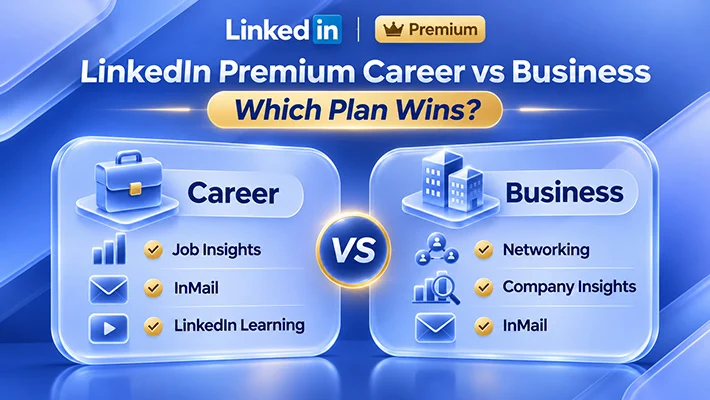
LinkedIn Premium Career vs Business: Which Plan Wins?
linkedin premium career vs business is an important comparison for professionals who want to get more value from LinkedIn without spending money on unnecessary features. Whether you’re searching for your next job, building professional relationships, attracting clients, or growing a company, choosing the right subscription can make a meaningful difference.
LinkedIn offers several paid subscriptions, but Premium Career and Premium Business are two popular choices for individuals. Both provide advanced networking opportunities, profile insights, LinkedIn Learning access, and tools that go beyond a free account. However, they serve different professional priorities.
Premium Career focuses primarily on helping people find employment and develop their careers. Premium Business supports professionals who want to expand their networks, strengthen their personal brands, and discover business opportunities.
This guide explores their features, pricing, limitations, and practical benefits. By the end, you’ll understand which subscription makes sense for your goals, how to evaluate its value, and when upgrading may not be necessary.
What Is LinkedIn Premium?
LinkedIn Premium is a collection of paid subscription services designed to help members achieve specific professional objectives. Depending on the subscription, users can access enhanced search capabilities, additional messaging opportunities, profile analytics, professional learning resources, and specialized insights.
The free version of LinkedIn already allows members to create profiles, connect with professionals, apply for jobs, publish content, and participate in industry discussions.
Premium subscriptions add features intended to make certain activities more efficient.
When exploring linkedin premium plans compared, it’s important to recognize that different subscriptions address different needs. LinkedIn also offers products such as Sales Navigator, Recruiter Lite, and Premium All-in-One, which serve more specialized purposes.
Understanding LinkedIn Premium Career
Premium Career is designed for job seekers, employees considering career changes, and professionals interested in improving their employment prospects.
It provides job-related insights, enhanced application features, recruiter outreach opportunities, and educational resources.
For example, someone looking for a marketing manager position can use Premium Career to identify relevant opportunities, evaluate their suitability for advertised positions, and contact hiring managers.
The subscription is particularly relevant when finding a better job is your immediate priority.
Understanding LinkedIn Premium Business
Premium Business focuses on networking, professional visibility, business research, and relationship development.
It is designed for entrepreneurs, consultants, freelancers, business owners, and professionals who regularly connect with potential customers or industry partners.
A freelance consultant, for example, might use the subscription to identify decision-makers, research companies, and contact prospective clients.
Understanding these different objectives is essential before comparing individual features.
LinkedIn Premium Career vs Business: Quick Comparison
The main difference between these subscriptions is their intended purpose. Premium Career prioritizes employment opportunities, while Premium Business offers additional capabilities for professional networking and commercial growth.
| Feature | Premium Career | Premium Business |
| Primary purpose | Job searching | Business networking |
| Starting monthly US price | $39.99 | $69.99 |
| Starting annual US price | $239.88 | $539.88 |
| Monthly InMail credits | 5 | 15 |
| LinkedIn Learning | Included | Included |
| Profile viewer insights | Included | Included |
| Job applicant insights | Included | Included |
| Business insights | Not included | Included |
| Unlimited people search | Not included | Included |
| Custom profile button | Not included | Included |
| Ideal users | Job seekers | Entrepreneurs and consultants |
Pricing reflects LinkedIn’s published starting US rates and may vary by region, billing method, taxes, and promotions. Features and availability may also change.
The comparison shows why the more expensive subscription isn’t automatically the better choice.
A job seeker may benefit from Career’s specialized employment tools without needing broader business capabilities. Meanwhile, someone who regularly researches prospects may find Business more useful.
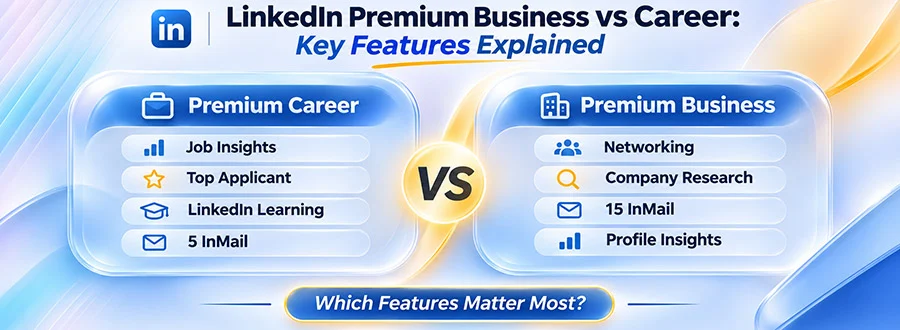
LinkedIn Premium Business vs Career: Key Features Explained
Choosing between the two subscriptions becomes easier when you understand how their tools support everyday professional activities.
Although several benefits overlap, differences in messaging allowances, search capabilities, and business features can significantly influence their usefulness.
1. Job Search and Application Features
Premium Career provides tools intended to help users discover suitable opportunities and improve their applications.
These include job match insights, Top Applicant recommendations, Top Choice Jobs, and profile improvement assistance.
Instead of applying indiscriminately, job seekers can use these features to identify positions that align with their qualifications.
How Job Insights Help Applicants
Job insights provide additional information about advertised opportunities and how a candidate’s profile relates to a position.
These insights can help applicants evaluate whether their experience matches an employer’s expectations.
However, being identified as a strong applicant doesn’t guarantee an interview.
Recruiters still consider qualifications, relevant experience, competition, and individual hiring requirements.
Can Business Subscribers Apply for Jobs?
Yes. Premium Business subscribers can access ordinary LinkedIn job listings and several Premium employment-related features.
However, Business is not specifically positioned around the job-seeking experience.
If employment is your only objective, paying extra for broader networking features may provide limited additional value.
2. InMail Messaging Capabilities
InMail allows eligible Premium subscribers to contact LinkedIn members outside their existing connections.
This can be valuable when approaching recruiters, hiring managers, prospective customers, or business partners.
Premium Career currently provides five monthly InMail credits, while Premium Business provides fifteen.
That difference matters when comparing linkedin premium career vs business for professional outreach.
A job seeker contacting a few carefully selected recruiters may find five messages sufficient.
A consultant approaching multiple prospective clients might benefit from the additional allowance.
Does Premium Business Offer Unlimited InMail?
No. Premium Business does not provide unlimited InMail credits.
Although LinkedIn offers unlimited search capabilities with Business, its standard monthly InMail allowance remains limited.
Certain recipient responses can return credits, and unused credits may accumulate within LinkedIn’s limits.
The most effective approach is to send thoughtful, relevant messages rather than relying on volume.
3. Profile Visibility and Analytics
Both subscriptions provide enhanced information about people who view your LinkedIn profile.
Members can access viewer information and trends covering up to 365 days, subject to privacy settings and other limitations.
These insights help users understand who is discovering their professional profiles.
For job seekers, visits from recruiters may indicate interest in their experience.
For business professionals, visits from potential customers or industry leaders may reveal networking opportunities.
However, profile views alone don’t establish buying intent or guarantee employment opportunities.
4. LinkedIn Learning Access
Both subscriptions include access to LinkedIn Learning, which offers thousands of courses covering professional and technical subjects.
Popular learning areas include leadership, project management, digital marketing, software development, communication, and business strategy.
When evaluating linkedin premium business vs career, LinkedIn Learning shouldn’t usually be the deciding factor because both subscriptions include it.
Instead, consider how frequently you’ll use the learning resources.
A professional developing skills for a career transition may benefit from structured courses and practical exercises.
An entrepreneur might focus on negotiation, sales, financial management, or leadership training.
The educational value ultimately depends on whether you apply what you learn.
LinkedIn Premium Career Pricing in 2026
Premium Career is the more affordable subscription of the two.
According to LinkedIn’s published US starting prices, the subscription costs:
- Monthly billing: $39.99
- Annual billing: $239.88
- Effective monthly cost with annual billing: $19.99
Annual billing provides substantial savings compared with paying the standard monthly rate throughout the year.
However, committing to an annual subscription isn’t always necessary.
Someone expecting to search for a job for only two or three months may prefer monthly billing.
This allows them to stop paying when they no longer need the additional features.
Is Premium Career Worth the Price?
The subscription can be worthwhile when you actively use its job search tools, recruiter messaging capabilities, and professional learning resources.
Consider someone applying for specialized positions where direct communication with hiring managers could be valuable.
Premium Career may help that person identify relevant contacts and approach opportunities more strategically.
However, it cannot replace a strong resume, relevant qualifications, interview preparation, or consistent applications.
If you rarely use LinkedIn, maintaining a free account may be more economical.
LinkedIn Premium Business Pricing in 2026
Premium Business costs more because it includes additional networking and business-focused features.
LinkedIn’s published starting US prices are:
- Monthly billing: $69.99
- Annual billing: $539.88
- Effective monthly cost with annual billing: $44.99
These prices make Business a more significant investment, especially for independent professionals managing limited budgets.
When reviewing linkedin premium plans compared, focus on whether the additional capabilities contribute directly to measurable professional results.
Why Does Premium Business Cost More?
Premium Business provides fifteen monthly InMail credits, unlimited search, business insights, and additional profile customization options.
These features support activities that may contribute to client acquisition, partnership development, and business research.
For example, a consultant who regularly identifies prospective customers may benefit from expanded search access.
However, purchasing the subscription doesn’t automatically generate qualified leads.
Business results still depend on audience targeting, relationship building, messaging quality, and the relevance of your services.
Monthly vs Annual Billing
Annual subscriptions reduce the effective monthly price but require a larger upfront commitment.
Monthly billing offers flexibility and may be preferable when you’re testing a new outreach strategy.
Before purchasing either plan, confirm the final amount displayed in your LinkedIn account.
Regional pricing, applicable taxes, promotional offers, and purchasing platforms can affect the amount charged.
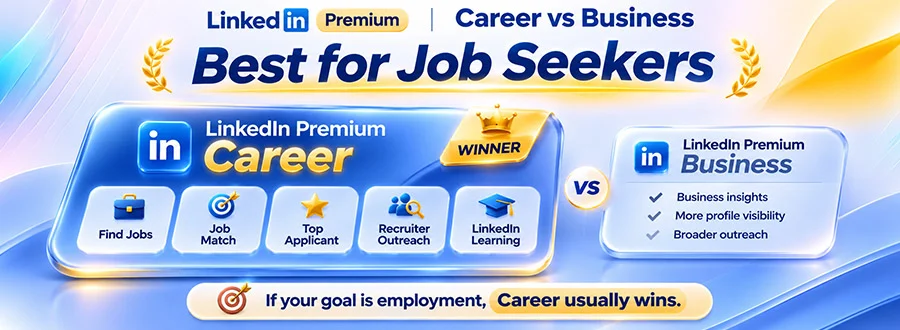
LinkedIn Premium Career vs Business for Job Seekers
For most active job seekers, Premium Career is the more practical starting point.
Its tools focus on discovering opportunities, understanding job requirements, improving profile presentation, and communicating with relevant professionals.
Consider a software developer searching for a senior position.
They could use Premium Career to identify promising vacancies, evaluate job matches, and contact selected hiring managers.
These activities align directly with the subscription’s intended purpose.
Benefits for Recent Graduates
Recent graduates often face challenges involving limited experience, professional visibility, and access to industry contacts.
Premium Career can help them explore suitable positions and learn skills relevant to their chosen industries.
However, graduates should avoid assuming that a paid badge will compensate for missing qualifications.
A complete profile, relevant projects, internships, and thoughtful networking remain essential.
Benefits for Career Changers
Professionals moving into a different industry may find job insights and LinkedIn Learning particularly useful.
For example, someone transitioning from administration into digital marketing could identify relevant skill requirements and explore courses addressing knowledge gaps.
They could also connect with professionals already working in the field.
When considering linkedin premium business vs career for a career transition, Career usually offers a more appropriate combination of features and cost.
LinkedIn Premium Business vs Career for Entrepreneurs
Entrepreneurs have different priorities from traditional job seekers.
Instead of searching for employers, they may be looking for customers, investors, suppliers, collaborators, or strategic partners.
Premium Business is designed to support these relationship-building activities.
Its broader search capabilities and additional InMail credits can make professional prospecting more convenient.
Finding Potential Customers
Business owners can search for professionals based on relevant characteristics, including industry, role, and company.
For example, a marketing consultant might identify business owners who could benefit from search engine optimization services.
The consultant could review company information, study the prospect’s professional interests, and develop a personalized introduction.
This approach is generally more useful than sending identical promotional messages to unrelated contacts.
Building Professional Credibility
Premium Business includes profile customization features such as a custom button that can direct visitors toward a website.
This can be useful for consultants and service providers who want to convert profile visits into meaningful inquiries.
However, credibility depends on more than subscription status.
A clear professional description, genuine recommendations, relevant experience, and useful published content are important foundations.
Researching Companies
Premium Business provides business insights that can support company research and professional decision-making.
These insights may help users understand organizations before approaching potential partners or customers.
When examining linkedin premium plans compared, this additional research capability is one of the clearer reasons to consider Business.
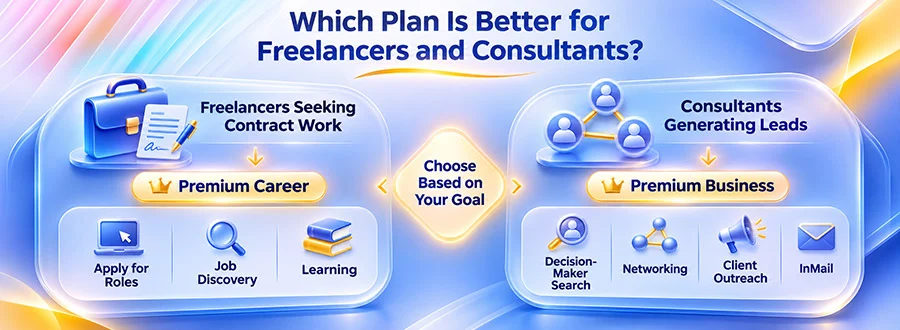
Which Plan Is Better for Freelancers and Consultants?
Freelancers often operate between employment and entrepreneurship.
Some primarily search for contract opportunities, while others actively market services to prospective clients.
The right subscription depends on which activity matters most.
A freelance graphic designer looking for advertised contract roles might find Premium Career sufficient.
A business consultant who regularly researches organizations and contacts decision-makers may prefer Premium Business.
Freelancers Seeking Contract Work
If your main activity involves applying for advertised opportunities, prioritize job discovery and relevant professional connections.
Career provides useful tools without the higher Business subscription cost.
You can still publish content, showcase projects, and communicate with existing connections using a free account.
Consultants Generating Their Own Leads
Consultants who actively identify and approach prospective customers may benefit more from Business.
The additional search and messaging features can support a structured outreach process.
Nevertheless, fifteen monthly InMail credits won’t replace a complete client acquisition strategy.
Consultants should also consider referrals, content marketing, professional communities, and existing relationships.
LinkedIn Premium Career vs Business for Networking
Networking is important for both career development and business growth.
The difference lies in the relationships you’re trying to establish.
Job seekers generally want to connect with recruiters, hiring managers, industry mentors, and potential colleagues.
Business professionals may prioritize founders, executives, purchasing managers, clients, and strategic partners.
Networking With Premium Career
Career provides enough functionality for targeted networking when your outreach volume is relatively low.
A professional can identify relevant contacts, send personalized connection requests, and use InMail selectively.
Successful networking usually involves demonstrating genuine interest rather than immediately asking for favors.
For example, referencing a person’s recent professional achievement can make an introduction more meaningful.
Networking With Premium Business
Business is better suited to professionals who need broader search capabilities and more frequent direct outreach.
Its additional InMail allowance provides greater flexibility when contacting people outside existing networks.
However, connection quality matters more than the number of messages sent.
A smaller group of relevant professional relationships can create more value than hundreds of disconnected contacts.
LinkedIn Premium Plans Compared: Return on Investment
Return on investment is one of the most important considerations before purchasing a paid subscription.
The right question isn’t simply which plan offers more features.
Instead, ask whether those features help you achieve a result that justifies their cost.
Measuring Career Subscription Value
For job seekers, useful performance indicators include:
- Relevant jobs discovered
- Applications submitted
- Recruiter conversations
- Interview invitations
- Professional skills developed
- Employment offers received
These indicators can help you evaluate whether Premium Career supports your search.
However, remember that interviews and offers are influenced by many factors beyond the subscription.
Measuring Business Subscription Value
Business subscribers can monitor activities such as:
- Qualified prospects identified
- Relevant conversations initiated
- Meetings arranged
- Partnership opportunities developed
- Client inquiries received
- Revenue associated with new relationships
For example, a consultant who gains a profitable client through a relationship initiated on LinkedIn may recover the subscription cost.
That outcome is possible, but it shouldn’t be treated as guaranteed.
A Simple ROI Calculation
You can estimate financial return using this formula:
ROI = (Value Generated − Subscription Cost) ÷ Subscription Cost × 100
Suppose a professional spends $70 on a monthly subscription and attributes $350 in additional net value to opportunities developed through its features.
The estimated return would be 400%.
This is only an illustrative calculation. Actual results depend on how accurately you attribute the outcome to the subscription and account for other expenses.
Common Mistakes When Choosing LinkedIn Premium
Many professionals subscribe before identifying exactly what they need.
This can result in unnecessary spending or disappointment when expected outcomes don’t appear.
Choosing the Most Expensive Plan Automatically
A higher subscription price doesn’t guarantee better results.
Someone primarily searching for employment may not benefit significantly from unlimited search or additional business insights.
Choose based on your activities rather than the assumption that more features always mean better performance.
Ignoring the Free Version
LinkedIn’s free account already provides substantial professional networking functionality.
You can build a strong profile, apply for jobs, publish articles, connect with relevant people, and participate in discussions.
Premium becomes more useful when you encounter specific limitations that paid features can address.
Sending Generic Outreach Messages
Additional InMail credits are valuable only when used thoughtfully.
Messages that immediately promote a service without considering the recipient’s interests often fail to establish meaningful relationships.
Personalize introductions, explain your reason for contacting someone, and keep requests reasonable.
Expecting Immediate Results
Neither subscription guarantees interviews, customers, or increased revenue.
LinkedIn is a platform for developing professional opportunities, not an automatic success system.
Consistent activity, relevant skills, and genuine relationships remain important.
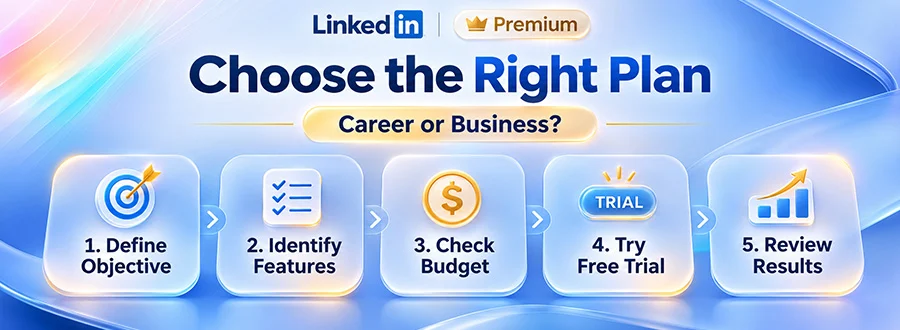
How to Choose the Right LinkedIn Premium Subscription
If you’re still deciding between linkedin premium career vs business, use a practical evaluation process before subscribing.
Step 1: Define Your Main Objective
Identify the result you want to achieve over the next three months.
Are you trying to secure employment, change industries, develop professional skills, attract clients, or expand business relationships?
Your answer should guide the subscription decision.
Step 2: Identify the Features You Actually Need
Make a short list of features that directly support your objective.
For employment searches, job insights and recruiter messaging may be priorities.
For business development, expanded search and additional outreach capacity may matter more.
Step 3: Evaluate Your Budget
Consider how long you expect to use the subscription and whether monthly or annual billing makes financial sense.
Avoid purchasing an annual subscription solely because the advertised monthly equivalent looks attractive.
Step 4: Test the Subscription
LinkedIn may offer free trials to eligible members, depending on regional availability and promotional conditions.
Use any available trial to test specific features rather than simply browsing the platform.
Remember that trials may automatically convert to paid subscriptions unless canceled before renewal.
Step 5: Review Your Results
After several weeks, evaluate whether the subscription has helped you achieve meaningful progress.
If you’re not using its distinctive features, consider whether a free account would meet your needs.
LinkedIn Premium Plans Compared: When Neither Plan Is Enough
Premium Career and Premium Business aren’t the only options available.
Some professionals need more specialized capabilities than either subscription provides.
When to Consider Sales Navigator
Sales Navigator is designed for more advanced sales prospecting and relationship management.
Professionals who require specialized lead discovery, account research, and sales workflows may find it more appropriate.
Premium Business can support general prospecting, but it isn’t a direct replacement for dedicated sales tools.
When to Consider Recruiter Products
Professionals whose primary responsibility involves sourcing and hiring candidates may need specialized recruiting solutions.
LinkedIn’s recruiting products provide capabilities designed around talent acquisition rather than ordinary job searching.
When to Stay With Free LinkedIn
If you only occasionally apply for jobs, maintain existing professional relationships, or publish content, a free account may be sufficient.
Upgrading makes more sense when you have a specific need that free features cannot adequately address.
Frequently Asked Questions
Is LinkedIn Premium Career Better Than Business?
Premium Career is generally better for people whose primary objective is finding employment or advancing their careers.
Premium Business is better suited to professionals who regularly research companies, expand business networks, and approach prospective clients.
Neither plan is universally superior.
What Is the Biggest Difference Between the Two Plans?
The most significant differences involve their intended audiences, pricing, monthly InMail allowances, search capabilities, and business-focused features.
Career emphasizes employment opportunities, while Business provides additional networking and commercial research functionality.
Is LinkedIn Premium Business Worth It for Job Seekers?
It may be useful for job seekers who also conduct extensive professional networking or business research.
However, Premium Career is usually the more economical starting point for someone focused primarily on employment.
Can I Use Premium Career for Business Networking?
Yes. Premium Career subscribers can connect with professionals, contact people outside their networks using available InMail credits, and develop business relationships.
The main limitation is that Career doesn’t include all the additional search and business features offered by Business.
Does Premium Business Include LinkedIn Learning?
Yes. Both subscriptions include LinkedIn Learning access, making professional development available regardless of which plan you select.
Course availability and certain AI-powered features may vary.
Can I Switch Between Premium Plans?
LinkedIn allows members to manage their Premium subscriptions, including changing plans under applicable conditions.
However, switching during a free trial may be restricted.
Review your account’s subscription settings and billing terms before making changes.
Does LinkedIn Premium Guarantee More Profile Views?
No subscription guarantees a specific number of profile views, recruiter responses, or business opportunities.
Premium provides additional tools, but outcomes depend on your profile, activity, professional relevance, and how effectively you use the platform.
Which Subscription Offers Better Value in 2026?
For employment-focused professionals, Career generally provides better value because of its lower price and targeted tools.
For entrepreneurs and consultants who actively use expanded search and outreach features, Business may justify its higher cost.
Final Verdict: LinkedIn Premium Career vs Business
The winner in the linkedin premium business vs career comparison depends on what you’re trying to accomplish.
Choose Premium Career if your main priorities are finding a job, reaching recruiters, improving your applications, developing professional skills, or preparing for a career transition.
Choose Premium Business if you’re focused on building professional relationships, researching companies, expanding your network, attracting clients, or strengthening your business presence.
For most individual job seekers, Career is the sensible starting point. It offers relevant employment tools at a lower subscription price.
For entrepreneurs, freelancers, and consultants with consistent business development activities, Business provides additional capabilities that may support their growth.
Ultimately, the best subscription isn’t the one with the longest feature list. It’s the one that solves a genuine problem, fits your budget, and supports measurable progress toward your professional goals.
Before upgrading, review LinkedIn’s current subscription details, identify the features you’ll actually use, and consider testing the plan if an eligible trial is available.