Is LinkedIn Verification Worth It? Honest Pros and Cons
Is linkedin verification worth it for professionals who already have a complete profile, genuine connections, and a strong reputation? It’s a fair question, especially when LinkedIn encourages users to establish trust through identity and workplace verification.
You may have noticed verification indicators on other profiles and wondered whether getting verified could improve your credibility, attract recruiters, or help potential clients feel more comfortable connecting with you.
But verification also raises practical questions. Does it improve profile visibility? Can it help generate business opportunities? Is sharing identification information worth the potential benefits?
The answer depends on your professional goals, available verification methods, and personal privacy preferences.
For some professionals, verification provides a useful additional trust signal. For others, maintaining an accurate profile and building meaningful relationships may matter considerably more.
This guide explores the real benefits, limitations, privacy considerations, and common misconceptions surrounding LinkedIn verification.
You’ll also learn who benefits most, when verification may be unnecessary, and how to decide whether it’s the right choice for your professional presence in 2026.
What Is LinkedIn Verification and How Does It Work?
Before deciding is linkedin verification worth it, you need to understand what LinkedIn actually verifies.
LinkedIn provides verification features that allow eligible members to confirm certain information about their identity, workplace, or other supported professional attributes.
Depending on availability, members may complete verification through an approved identity provider, an eligible workplace email address, or an organization-supported system.
When verification succeeds, LinkedIn can display relevant confirmation information on the member’s profile.
However, a verified profile doesn’t mean LinkedIn has independently checked every employment claim, professional qualification, recommendation, or piece of content.
Identity Verification
Identity verification is designed to confirm that the person operating a profile matches the information submitted through an approved verification process.
Depending on the country and provider, this may require a supported government-issued identification document and additional identity checks.
Some methods involve document scanning, facial matching, or electronic identification technology.
The exact requirements vary.
Workplace Verification
Workplace verification focuses on confirming a member’s association with an organization.
Eligible professionals may verify through an approved company email domain or an employer-supported identity system.
This can provide additional context about someone’s professional affiliation.
However, workplace verification does not independently guarantee that every employment detail on the profile is accurate.
Is Verification Available to Everyone?
Not necessarily.
Eligibility depends on location, account circumstances, document compatibility, and supported verification methods.
Some members may qualify for identity verification but not workplace verification.
Others may not currently have an eligible method available.
Optional profile verification is also different from identity checks required during certain account-recovery situations.
Does LinkedIn Verification Matter in 2026?
One of the biggest questions professionals ask is does linkedin verification matter when LinkedIn already provides profile photographs, work histories, recommendations, and professional connections.
The answer depends on how people use your profile.
LinkedIn is a platform where strangers frequently make professional decisions based on information they see online.
Recruiters evaluate candidates, businesses research service providers, and professionals receive connection requests from unfamiliar individuals.
In these situations, verification can offer an additional identity-related signal.
Why Professional Identity Matters Online
Imagine receiving two connection requests from unfamiliar consultants offering similar services.
Both profiles contain relevant experience and professional descriptions.
One also displays verified identity information.
That verification might provide additional reassurance about who operates the account.
However, it wouldn’t automatically make that consultant more experienced, honest, or suitable for your needs.
Verification is one piece of information rather than a complete measure of credibility.
How LinkedIn Verification Advantages Affect First Impressions
Among the potential linkedin verification advantages is the ability to provide additional context during an initial profile review.
People who have never interacted with you may appreciate knowing that certain identity or workplace details have been confirmed.
This can be especially relevant when professional conversations begin entirely online.
Still, the effect depends on the individual viewing your profile.
Some people pay attention to verification indicators, while others prioritize recommendations, experience, or mutual connections.
Does Verification Guarantee Better Opportunities?
No.
LinkedIn doesn’t guarantee that verification will increase job offers, profile views, search rankings, or business inquiries.
Those outcomes depend on many factors, including your qualifications, network, communication, and the relevance of your professional activity.
Verification may support trust, but it shouldn’t be treated as a guaranteed growth strategy.
7 LinkedIn Verification Advantages Worth Considering
Understanding the linkedin verification advantages helps you evaluate whether the feature provides meaningful value for your situation.
The following benefits are potential practical advantages rather than guaranteed results.
1. Adds an Extra Layer of Identity Confidence
A verified profile can indicate that certain identity information has been confirmed through an approved process.
This may help unfamiliar professionals feel more comfortable initiating conversations.
For example, a recruiter reviewing a candidate’s profile may appreciate having an additional identity signal.
However, identity verification doesn’t establish professional competence.
It simply provides confirmation related to the verified attribute.
2. Supports Professional Credibility
Credibility develops through accurate information, meaningful experience, and consistent behavior.
Verification can complement these qualities.
A freelancer who shares genuine client projects, useful insights, and relevant experience may benefit from having verified identity information alongside that content.
The verification itself doesn’t replace evidence of professional ability.
3. Helps Clarify Workplace Associations
Workplace verification may help other members understand that a professional has confirmed an eligible association with an organization.
This can be useful when communicating with potential clients, recruiters, or business partners.
However, workplace verification isn’t a substitute for independent employment checks when those are necessary.
4. Provides Additional Context for Networking
LinkedIn users regularly receive invitations from unfamiliar professionals.
A verification indicator may offer another piece of information when evaluating whether to connect.
This can be particularly useful for people who conduct much of their networking remotely.
Still, verification shouldn’t be the only factor influencing connection decisions.
5. Can Complement a Strong Personal Brand
A professional brand depends on more than a profile headline or attractive photograph.
It includes expertise, consistency, communication, and the quality of your work.
Verification can support that overall presentation by confirming eligible information.
For consultants and independent professionals, this additional context may be useful when introducing themselves to new audiences.
6. May Reduce Some Identity Uncertainty
One of the practical linkedin verification advantages is helping others distinguish between profiles that have completed supported verification and those that haven’t.
This may reduce uncertainty in certain interactions.
However, unverified profiles aren’t automatically fake, and verified profiles aren’t guaranteed to be trustworthy.
Members should continue assessing unfamiliar contacts carefully.
7. Offers a Free Verification Option for Eligible Members
LinkedIn’s standard profile verification features are free for eligible users.
This makes verification potentially worthwhile for professionals who meet the requirements and are comfortable with the applicable privacy terms.
You don’t generally need LinkedIn Premium or a large follower count to access standard verification.
Availability and eligibility still vary.
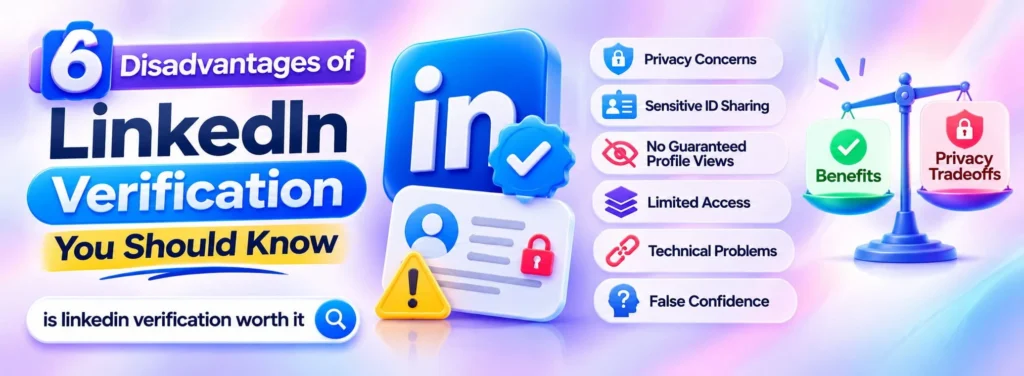
6 Disadvantages of LinkedIn Verification You Should Know
While the benefits are worth considering, the disadvantages matter just as much.
If you’re asking is linkedin verification worth it, you should evaluate both sides before submitting personal information.
1. You May Need to Share Sensitive Identity Information
Some identity-verification methods require government-issued identification.
Depending on the provider, the process may also involve facial images or other identity checks.
These requirements can create privacy concerns for users who prefer not to share sensitive documents online.
The exact information collected and retained depends on the method and provider.
2. Verification Doesn’t Guarantee More Profile Views
A common misconception is that verified profiles automatically receive better visibility.
There is no reliable basis for promising a specific increase in impressions, profile visits, or search rankings solely because of verification.
Your professional activity, content relevance, and network still matter.
3. Not Everyone Can Access the Same Methods
Verification availability differs by country, organization, and supported provider.
Some professionals may not have an eligible document or workplace verification option.
This limitation can be frustrating, particularly when colleagues in other locations have access.
4. Technical Problems Can Interrupt Verification
Verification may fail because of document compatibility, camera permissions, expired sessions, or temporary technical difficulties.
These problems can delay the process.
Some members may need additional assistance before completing verification successfully.
5. Verification Can Create False Confidence
A verified profile may still belong to someone who shares misleading information or behaves unprofessionally.
Verification confirms specific attributes, not overall honesty or competence.
Treating it as a complete guarantee of trust can lead to poor decisions.
6. Privacy Considerations May Outweigh the Benefits
Some professionals may decide that the potential credibility benefits don’t justify sharing additional personal information.
This is particularly relevant when the available verification method involves sensitive identification documents.
Choosing not to complete optional verification doesn’t automatically make your profile less legitimate.
Is LinkedIn Verification Worth It for Job Seekers?
For job seekers, the question does linkedin verification matter often comes down to whether verification influences recruiters or hiring decisions.
A verified identity may provide additional reassurance when a recruiter reviews an unfamiliar candidate.
However, employers generally need much more information to evaluate suitability.
Potential Benefits for Job Applicants
Verification can complement a professional profile containing accurate work experience, relevant skills, and clear career goals.
It may also help confirm that an account represents the individual communicating with recruiters.
This can be useful during online networking.
What Recruiters Actually Need to Evaluate
Recruiters still need to assess qualifications, experience, communication skills, and role-specific requirements.
A verification indicator doesn’t replace interviews, reference checks, or other hiring procedures.
Candidates should prioritize a complete profile, relevant achievements, and thoughtful applications.
Should Every Job Seeker Get Verified?
Not necessarily.
If verification is available, free, and compatible with your privacy preferences, it may be a reasonable addition.
But if the process isn’t accessible, focus on strengthening the information you can control.
A well-written profile and relevant professional experience remain valuable without verification.
Is LinkedIn Verification Worth It for Freelancers and Consultants?
For independent professionals, is linkedin verification worth it often relates to client confidence.
Freelancers and consultants frequently introduce themselves to potential customers who have never met them.
Their LinkedIn profiles may serve as an early point of contact before a discovery call or project discussion.
How Verification May Help Freelancers
A verified identity can provide an additional signal that the person behind the profile has completed an approved identity check.
This may help when communicating with unfamiliar clients.
For example, a consultant offering digital marketing services might use LinkedIn to share case studies, explain their approach, and connect with business owners.
Verification could complement that professional presentation.
What Matters More Than Verification?
Clients usually need evidence that a freelancer can deliver the promised service.
Relevant portfolios, clear proposals, realistic expectations, and genuine testimonials are more informative than a verification indicator alone.
Transparent communication and reliable delivery also help build lasting relationships.
Should Consultants Prioritize Verification?
Verification can be a useful addition, but it shouldn’t become the foundation of a client-acquisition strategy.
If you’re choosing between improving your portfolio and obtaining optional verification, prioritize the activity that addresses your biggest credibility gap.
For many independent professionals, demonstrating relevant expertise will provide more practical value.
Does LinkedIn Verification Matter for Recruiters and Sales Professionals?
The question does linkedin verification matter also applies to professionals who contact unfamiliar people as part of their daily work.
Recruiters, business development representatives, and sales consultants often depend on LinkedIn outreach.
A verified identity may provide useful context for recipients evaluating those messages.
Verification and Recruiting
Recruiters frequently contact candidates who aren’t actively looking for jobs.
A verified profile may provide another signal that the recruiter represents a real professional identity.
However, candidates should still evaluate job opportunities carefully.
Verification doesn’t guarantee that a job advertisement or recruitment offer is legitimate.
Verification and B2B Sales
Business buyers often research the people contacting them.
A verified profile can complement an accurate company association, relevant experience, and a professional communication style.
Still, buyers are more likely to value clear business relevance than a verification indicator alone.
Does Verification Improve Response Rates?
There is no guaranteed increase in connection acceptance or message response rates from verification alone.
Response rates depend on audience relevance, timing, message quality, and many other factors.
Rather than relying on verification to improve outreach, focus on communicating genuine value.
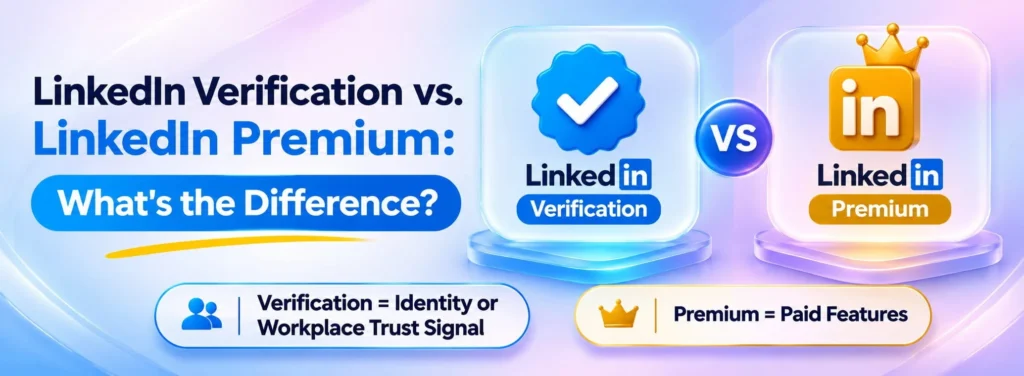
LinkedIn Verification vs. LinkedIn Premium: What’s the Difference?
Some users confuse the linkedin verification advantages with benefits associated with LinkedIn Premium.
However, verification and Premium are different features.
LinkedIn verification confirms eligible information about a member’s identity or workplace.
LinkedIn Premium is a paid subscription offering additional features depending on the selected plan.
Do You Need Premium to Get Verified?
No. Standard profile verification is available free to eligible members.
You don’t generally need to purchase Premium to complete an available verification method.
However, eligibility requirements still apply.
Does Premium Automatically Verify Your Profile?
Purchasing Premium doesn’t automatically mean your identity or workplace has been verified.
The subscription and verification processes serve different purposes.
If verification is important to you, check the available options directly in your profile.
Which One Is Better for Professional Growth?
The answer depends on your goals.
Premium may provide subscription features useful for particular professional activities.
Verification provides an additional identity or workplace trust signal.
Neither automatically guarantees more clients, better job opportunities, or increased visibility.
Does LinkedIn Verification Affect SEO or Profile Visibility?
Professionals working on personal branding frequently ask does linkedin verification matter for LinkedIn search visibility or Google rankings.
This question deserves a careful distinction between confirmed platform functionality and assumptions about ranking algorithms.
Does Verification Improve LinkedIn Search Rankings?
LinkedIn doesn’t provide a universal guarantee that verified profiles rank above unverified profiles.
Search visibility can depend on numerous factors, including profile relevance, professional information, and the searcher’s context.
Verification shouldn’t be treated as a proven ranking shortcut.
Does Google Prefer Verified LinkedIn Profiles?
There is no established guarantee that obtaining LinkedIn verification directly improves your profile’s Google search ranking.
Google evaluates webpages using its own systems.
A verified profile may provide useful information to visitors, but that doesn’t establish a direct SEO benefit.
What Actually Helps Professional Visibility?
Complete your profile with accurate information.
Use a clear professional headline and describe your expertise naturally.
Share useful content, participate in relevant discussions, and build meaningful professional connections.
These practices can improve how people discover and evaluate your professional presence.
Verification may complement your efforts, but it cannot replace them.
LinkedIn Verification Privacy: Is Sharing Your ID Worth It?
Privacy is one of the most important factors when evaluating is linkedin verification worth it.
Some verification methods require sensitive information, including government identification or facial images.
Before participating, understand what information is collected and how it may be handled.
What Happens to Your Information?
Depending on the method, an approved verification provider may process identification documents and related information.
The provider may communicate a verification result or other specified details to LinkedIn.
Data-sharing and retention practices depend on the particular process.
Review the current privacy notices rather than assuming every provider follows identical rules.
Can Your Information Be Deleted?
Deletion rights and retention requirements vary.
Some information may be eligible for deletion upon request, while certain records may be retained for legitimate legal or security purposes.
Check the provider’s privacy procedures and LinkedIn’s available controls.
How to Make a Privacy-Conscious Decision
Consider whether the verification method requires information you’re comfortable sharing.
Review the provider’s identity, privacy policy, and retention terms.
If several eligible methods are available, compare their requirements.
When verification is optional, you can decide whether the potential benefit justifies the requested information.
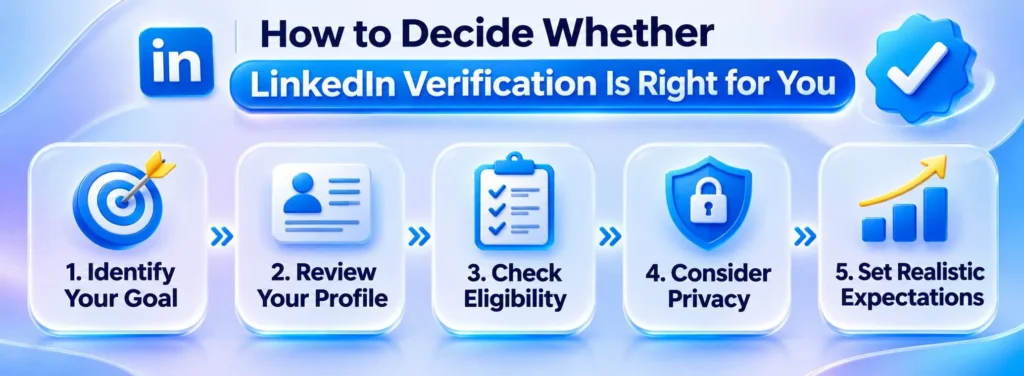
How to Decide Whether LinkedIn Verification Is Right for You
Understanding linkedin verification advantages becomes easier when you connect them to your actual professional goals.
Rather than following trends, evaluate how verification would contribute to your online presence.
Step 1: Identify Your Main Goal
Are you trying to build client confidence, strengthen your professional identity, or confirm your workplace association?
Different goals may make verification more or less relevant.
Step 2: Review Your Existing Profile
Look at your headline, experience, recommendations, featured projects, and professional activity.
If important information is missing, improving your profile may be more valuable than adding verification.
Step 3: Check Your Eligibility
Review the verification options available through your LinkedIn account.
Make sure you meet the relevant document, location, or workplace requirements.
Step 4: Consider Privacy and Convenience
Read the applicable privacy information.
Think about whether the required steps and information are reasonable for your circumstances.
Step 5: Set Realistic Expectations
Verification can provide an additional trust signal.
It won’t automatically transform your career, attract clients, or improve your content performance.
Treat it as one component of a broader professional strategy.
Frequently Asked Questions About LinkedIn Verification
Is LinkedIn Verification Worth It for Beginners?
If you’re wondering is linkedin verification worth it when you’re just starting your career, consider your networking goals.
Verification can provide an additional identity signal, but it isn’t essential for creating a credible professional profile.
Beginners should focus on accurate information, relevant skills, meaningful connections, and professional communication.
Does LinkedIn Verification Matter Without Many Followers?
The question does linkedin verification matter isn’t determined by follower count.
Eligible professionals can benefit from identity confirmation regardless of audience size.
However, verification doesn’t guarantee more followers or engagement.
A smaller, relevant network can still provide valuable professional opportunities.
What Are the Main LinkedIn Verification Advantages?
The main linkedin verification advantages include additional identity confidence, clearer workplace associations, and an extra trust signal for unfamiliar connections.
These benefits can complement an established professional reputation.
They don’t guarantee employment opportunities, business growth, or better search rankings.
Is LinkedIn Verification Free in 2026?
LinkedIn’s standard profile verification options are free for eligible members.
You don’t generally need LinkedIn Premium to access them.
However, supported methods and eligibility requirements vary by country, organization, and verification provider.
Always begin through LinkedIn’s official interface.
Can LinkedIn Verification Help Me Get More Clients?
Verification may provide additional reassurance to potential clients who review your profile.
However, there is no guaranteed increase in leads or conversions.
Clients still need relevant evidence of your expertise, including case studies, recommendations, and clear communication.
Can I Use LinkedIn Without Verification?
Yes. Optional profile verification isn’t universally required.
Many legitimate professionals maintain active accounts without displaying verification information.
However, LinkedIn may separately require identity checks in certain security or account-recovery situations.
Does LinkedIn Verification Matter for Building Trust?
When asking does linkedin verification matter for professional trust, remember that verification confirms particular information rather than overall character or competence.
It can support credibility, but trust also depends on honesty, relevant experience, and consistent professional behavior.
Final Thoughts: Should You Get Verified on LinkedIn?
So, is linkedin verification worth it in 2026?
For eligible professionals who are comfortable with the verification requirements, it can be a useful addition to an authentic LinkedIn profile.
The most meaningful linkedin verification advantages involve confirming certain identity or workplace details and providing additional context to people who haven’t interacted with you before.
However, verification isn’t a guaranteed way to increase visibility, secure job offers, or attract clients.
Your professional experience, communication skills, and reputation remain more important.
If verification is available and aligns with your privacy preferences, completing it may be worthwhile.
If it isn’t available, you can still build a credible professional presence through accurate information and meaningful engagement.
Ultimately, the best approach is to treat verification as an optional trust signal rather than the foundation of your professional success.